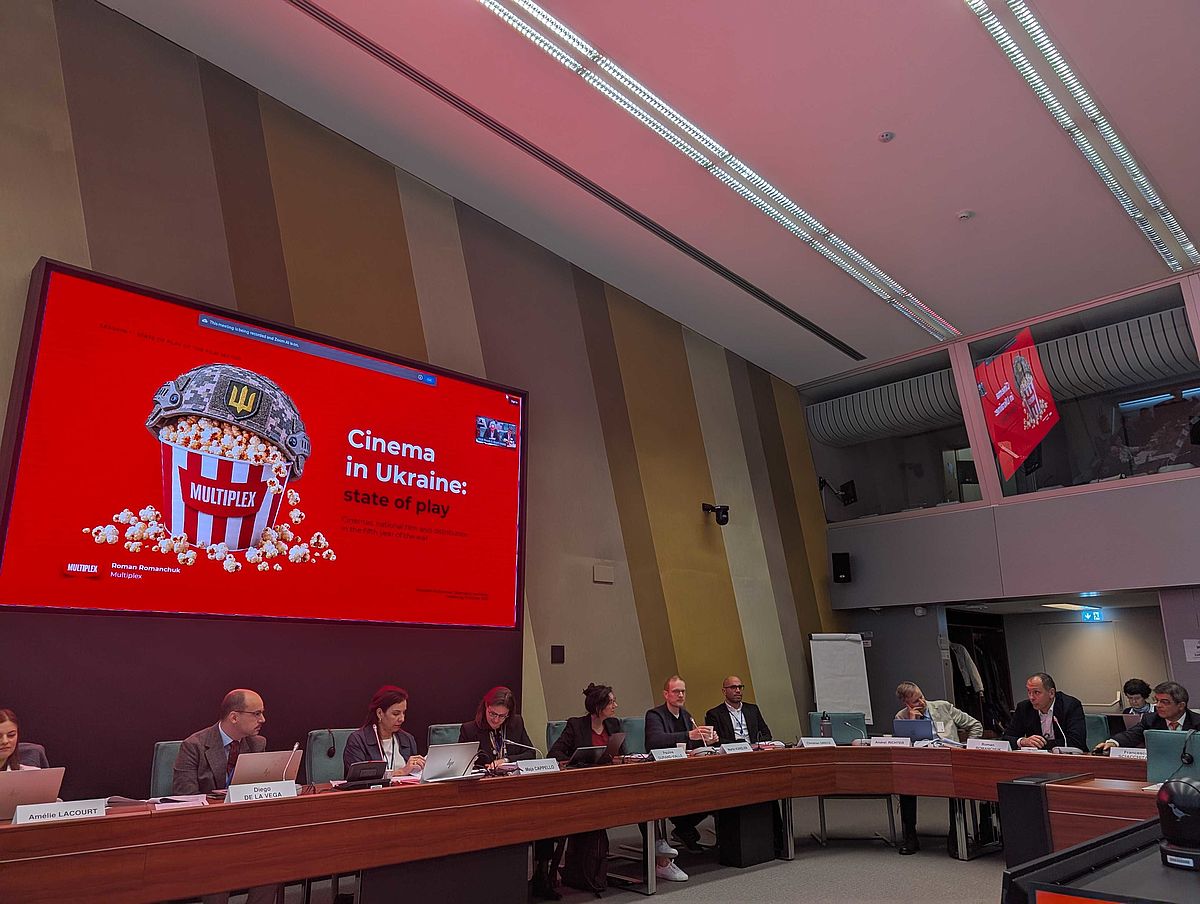
UNIC was proud to take part in the workshop “Rebuilding Ukraine’s audiovisual sector: how can European professionals help?”, held on 9 October 2026 at the Council of Europe in Strasbourg. Organised by the European Audiovisual Observatory (EAO), the event brought together Ukrainian professionals and their counterparts from across Europe. The workshop marked a significant moment for reflection on where Ukraine’s film and audiovisual sector stands today, the priorities for rebuilding it, and the practical ways international collaboration can make a difference.
UNIC took an active role throughout the day, particularly during the first two sessions focusing on the state of the market and the future of public support. We were especially proud that our member Roman Romanchuk, CEO of Multiplex—Ukraine's largest cinema chain—delivered an impactful, scene-setting presentation to kick off the conference. Roman highlighted the incredible resilience of the Ukrainian exhibition sector in the face of ongoing wartime challenges, while pointing to clear, practical avenues where European partners can offer vital support.
Among the workshop's discussions, the opening panel discussed where the European and Ukrainian film sector stand today with regard to film production, distribution and exhibition; their respective main market drivers; their respective strengths and challenges; where integration/cooperation create value and what practical support would make a difference. Roman Romanchuk, CEO of Multiplex set the scene.
Contributors to this session included:
- Kamil Jarończyk, UNIC
- Emanuele Grassia, FIAD
- Egor Olesov, Producer and Co-founder, United Heroes Group
- Volodymyr Yatsenko, Producer, Fore Films
- Natalia Libet, Producer, 2Brave Productions
- Manon Duverger, ESFUF / Film policy Advisor Min. Culture Ukraine
- Martin Kanzler, Deputy Head of Department for Market Information, EAO (Moderator)
In the second panel, focus was put on public support for the film and audiovisual sectors. With the Ukrainian State Film Agency’s budget facing severe cuts, yet countered by a new statutory funding floor and the Presidential Tysiachovesna programme, the debate centred on how public money should be utilised to build a sustainable ecosystem. The session outlined that the question is no longer whether Ukraine should support film and audiovisual production, but what public support should ultimately achieve. The scene was set by Sevara Irgacheva, Secretary General of EFAD who gave a presentation on the current state of public funding in Ukraine and how European partners have supported.
Panellists and key contributors for this second session included:
- Natalia Libet, Producer, 2Brave Productions
- Roman Romanchuk, CEO, Multiplex
- Kamil Jarończyk, UNIC
- Emanuele Grassia, FIAD
- Manon Duverger, ESFUF / Film policy Advisor Min. Culture Ukraine
- Sophie Valais, European Audiovisual Observatory (Moderator)
During this panel, UNIC strongly advocated that public funding must not only stimulate production but also sustain the exhibition infrastructure that ensures these works reach their intended audiences on the Big Screen.
After lunch, two afternoon sessions took place. Session 3 focused on the market point of view for film and audiovisual services in Europe and Ukraine, examining the impact of platforms on traditional broadcasters, key priorities for the coming years, options for public support, and opportunities for international collaboration. Session 4 turned to platform regulation and the role of regulators, exploring the legal foundations under Ukrainian law, EU accession requirements, regulatory models, liability grey zones, and international best practices.
In the workshops it was clear that sustaining theatrical exhibition and integrating Ukraine more closely into the European film and audiovisual ecosystem are shared interests across our industry. It was great to see so many key figures come together for open and constructive discussions about the opportunities and challenges ahead, reaffirming that solidarity, investment in exhibition infrastructure are essential to rebuilding and maintaining a resilient sector.